
Kitchen and Cooking Safety for Older Adults
Enjoying a home-cooked meal is one of life’s simple pleasures at any age. For older adults, being able to produce nutritious meals at home can be a key element in remaining healthy, independent, and maintaining a positive outlook on one’s abilities to care for themselves. At the same time, kitchens can be a dangerous place due to increased risks of falls, cuts, fires and burns.
While a kitchen can never be made completely free of hazards, there are key habits you can develop to make cooking a safer activity, as well as concrete steps you can take to make the kitchen a safer working environment. 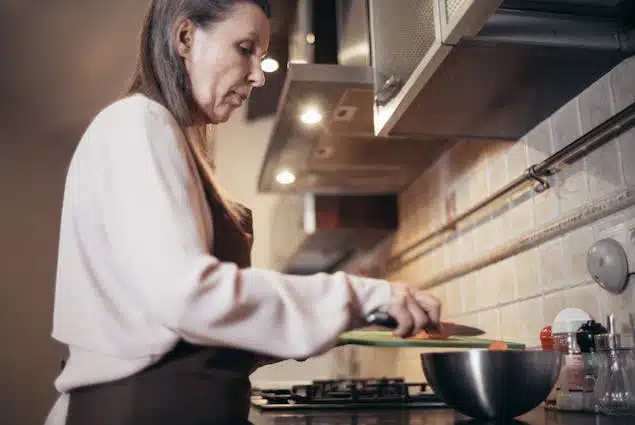
Fall Prevention in the Kitchen
While tiled bathrooms and dark bedrooms are the most common locations for household falls, wet floors and time-sensitive tasks can make falls in the kitchen a very real threat. Consider the following tips to reduce this hazard:
- Keep a mop or other tools handy to quickly manage spilled food and liquids.
- Consider wearing nonslip, backed shoes when cooking to improve traction.
- Keep your kitchen working area well-lit and reduce clutter on or near the floor.
- Rather than using small non-slip mats, consider purchasing larger area mats and keep them tightly secured to the floor.
- Store commonly used items between knee and shoulder height to reduce the need for climbing or stooping.
- Keep a stool or chair in the kitchen to allow for resting during downtime. Reducing fatigue also reduces the risk of other accidents.
Develop safe habits and a safe kitchen environment
Like a good marinade, preparation can go a long way towards positive outcomes in the kitchen.
- Make note of when you are most active and alert during the day and make a point to take on bigger kitchen projects during this time to avoid preventable oversights.
- Keep a kitchen fire extinguisher close to hand and be sure you understand how to operate it safely.
- While most apartments only require a single smoke alarm, consider installing one in your kitchen for added safety.
- Avoid wearing loose clothing that may dangle over cooking surfaces and catch fire. Also consider removing jewelry, watches, and other accessories that may fall into food or catch on pan handles.
- Ensure your working area is well lit and that you have a clear counter space for tasks like cutting, mixing, and peeling.
- Make a point to wipe down work areas, particularly cooking surfaces, the oven, stove, and exhaust fan to reduce grease buildup and decrease the risk of fire.
- When using pans on a stove top, keep the handles pointed inward rather than hanging off the stove to avoid accidentally bumping them as you move.
- Stay in the kitchen at all times when food is cooking. If you need to leave the room, consider turning off heat sources before you leave to reduce the risk of fire.
Use kitchen tools that promote safety
It can be easy to get attached to well-used kitchen implements, but switching to adaptive tools or purchasing cooking items with an eye for safety can greatly reduce hazards.
- Purchase one or more timers and make a point to use them any time a burner, oven, or other source of heat is on. Consider labeling each timer so you know what appliance to check and turn off.
- When cooking on a stovetop, have a matching lid handy at all times. In the event of a fire, make a point to cover the pot or pan with the lid before turning off the heat source to prevent the spread of fire.
- Well-maintained, sharp knives tend to result in fewer accidental cuts as they are less likely to slip when cutting into food.
- Evaluate your knife selection and ensure you feel comfortable using them. If not, consider switching to smaller paring knives, or investigating adaptive knives. Tools like rocker knives, which look like a capital I with a handle on top and cutting surface on the bottom, might seem unconventional at first, but provide more positive control for many kitchen tasks.
- As you cook, make note of tasks that give you trouble. Chances are, there are tools on the market that can make everything from stirring a pot to opening cans easier and safer.
- Invest in nonslip cutting boards to make food prep tasks safer. Alternatively, get in the habit of putting a damp dishrag underneath a cutting board to prevent the surface from sliding.
SelectCare hopes you have found these kitchen safety guidelines helpful. Our team of home health care experts has helped New Yorkers live happier, healthier lives since 1985. If you or a loved one might need a helping hand at home, in the kitchen, or on the town, now might be the time to call SelectCare,request a free in-home health care guide, or read testimonials from past and current SelectCare clients.
Contact us any time, 24/7 with any questions, or to request a free in-home evaluation.